The Influence of Behavioral Economics on Reward Structures Across Digital Card and Wheel Games
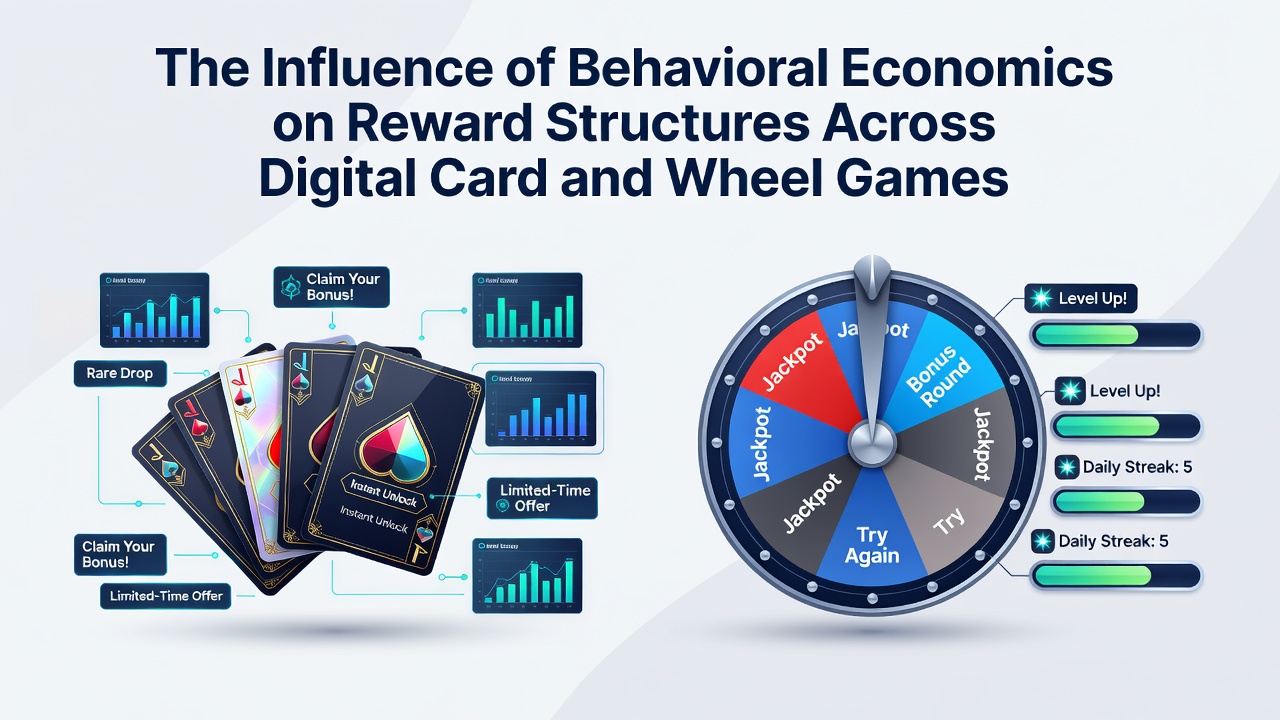
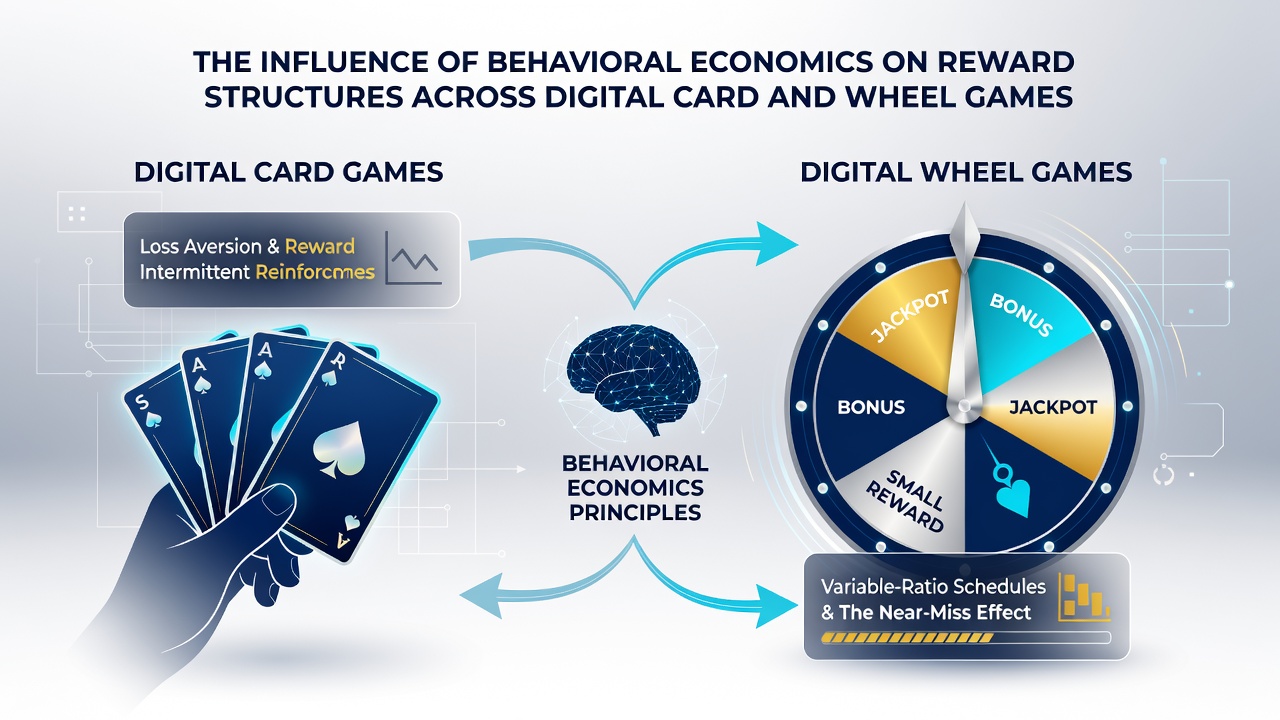
Behavioral economics principles shape how digital card and wheel games structure their reward systems, and operators apply concepts such as variable reinforcement schedules along with loss aversion to influence player engagement patterns. Studies from academic institutions show that intermittent reward delivery triggers dopamine responses similar to those observed in laboratory conditioning experiments, and this mechanism appears across both card-based titles like online blackjack variants and wheel-based formats including digital roulette and segmented prize wheels.
Researchers at institutions including the University of Nevada have documented how near-miss outcomes in wheel games increase continuation rates even when the mathematical expectation remains negative, and these findings align with prospect theory developed by Kahneman and Tversky. Card game platforms meanwhile incorporate framing techniques that present bonus rounds as separate decisions rather than integrated probabilities, which alters how users perceive risk and potential returns according to data collected through session tracking software.
Core Behavioral Mechanisms in Digital Reward Design
Variable ratio reinforcement schedules form the foundation of many reward structures, and players encounter unpredictable payout intervals that sustain longer session durations compared with fixed schedules. Data from platform analytics indicates average playtime extends by measurable percentages when outcomes follow this pattern rather than consistent intervals, and operators adjust reel or card distribution algorithms accordingly while remaining within regulatory parameters set by bodies such as the Nevada Gaming Control Board.
Loss aversion exerts additional pressure on decision-making, and users tend to chase recovery of prior stakes more aggressively than they pursue equivalent gains. Platform interfaces often highlight recent near-misses or partial progress toward bonuses through visual cues, and this presentation reinforces continued participation because the psychological impact of losses registers more strongly than gains of similar magnitude.
Application in Digital Card Games
Online card platforms integrate behavioral triggers through side bet structures and progressive jackpot mechanics that activate at irregular intervals. One documented approach involves displaying accumulated prize pools prominently while obscuring the low probability attached to each individual contribution, and session data reveals elevated bet sizing during periods when these displays remain visible. Multi-hand blackjack variants further apply anchoring by presenting default wager amounts that influence subsequent player choices even when optimal strategy suggests different sizing.
Researchers tracking European markets have noted similar patterns in digital poker environments where loyalty point accrual systems create artificial milestones, and these milestones encourage extended play to reach the next tier despite the underlying house edge remaining constant. Regulatory reports from the Malta Gaming Authority indicate operators must disclose these mechanics in terms and conditions, yet the placement and formatting of such disclosures can still interact with established cognitive biases.
Wheel Game Implementations and Recent Trends
Wheel-based games employ segmented prize distributions where visual momentum and deceleration effects heighten anticipation during the final rotations, and this sensory layering compounds the variable reward effect. October 2026 updates to certain platforms introduced dynamic segment resizing based on individual player history, and preliminary figures from operator reports suggest these adjustments correlate with increased repeat engagement rates in controlled testing environments.
Canadian regulatory data compiled through provincial oversight bodies shows that wheel games with integrated loyalty multipliers produce higher average revenue per user when the multiplier activation follows a randomized rather than predictable cadence. The same datasets indicate that players respond differently to card versus wheel formats, with card game participants showing greater sensitivity to loss framing while wheel game users demonstrate stronger reactions to near-miss visualizations.
Regulatory and Industry Responses
Government agencies across multiple jurisdictions continue to examine how these design elements intersect with responsible gambling tools, and the Australian Communications and Media Authority has published guidelines requiring clear separation between promotional displays and actual game outcomes. Industry associations such as the European Gaming and Betting Association have issued voluntary standards encouraging operators to limit certain visual triggers during extended sessions, and compliance monitoring relies on aggregated behavioral datasets rather than individual case reviews.
Academic collaborations with platform providers have produced additional research on intervention timing, and one study released through the Journal of Gambling Studies examined the effectiveness of mandatory break prompts calibrated to session length and reward frequency patterns. Results indicated modest reductions in total wagers when prompts aligned with behavioral momentum peaks rather than fixed time intervals.
Conclusion
Behavioral economics continues to inform reward architecture across digital card and wheel games through established mechanisms that operators implement within existing regulatory frameworks. Data from multiple regions demonstrates measurable effects on session metrics, and ongoing research examines how refinements in presentation and timing interact with player decision processes. Future platform updates will likely incorporate additional findings from these studies as oversight bodies refine disclosure and design requirements.